
Karen Corrigan (ACC): “Good creative ideas should result from a real strategic collaboration with the client.”
As chairwoman of the ACC, Karen Corrigan discusses her concerns about the growing disconnect between advertisers and creativity, emphasizing that creativity is crucial for business success and not just about winning awards.
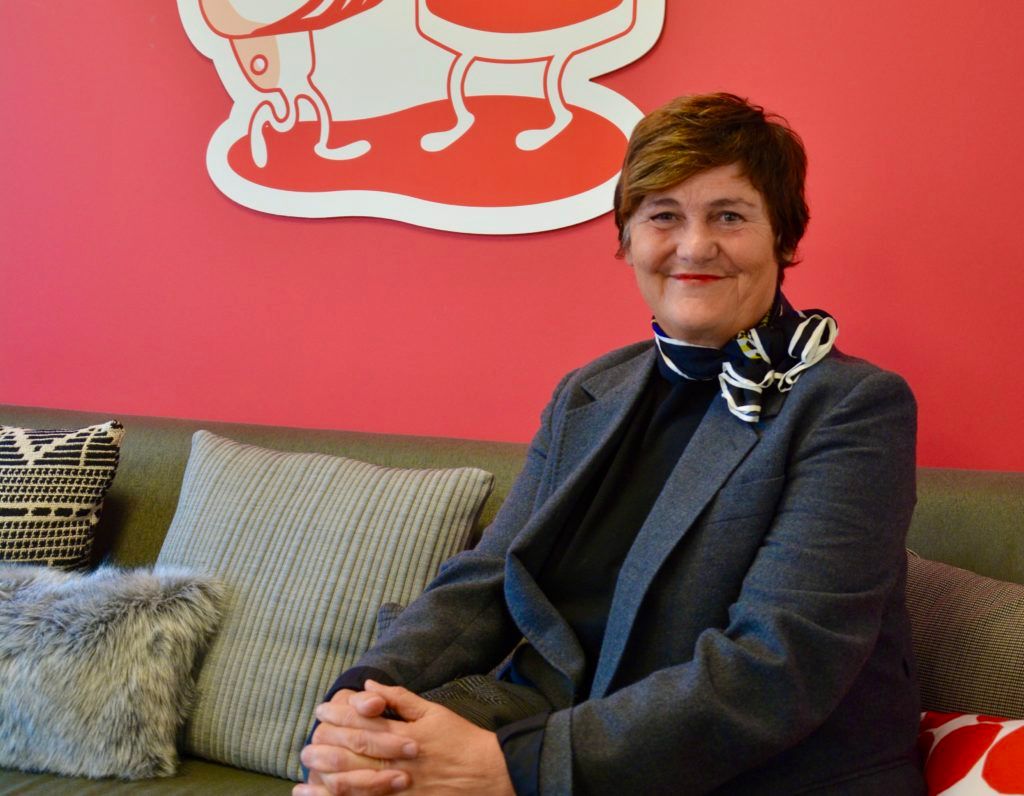
The chairwoman of the Association of Communication Companies, and co-founder and CEO of Happiness, was present in Cannes. We took the opportunity to ask Karen Corrigan a few questions about the painful evolution in the relationship between advertisers and creativity, as well as the role and value of creativity. It’s a fitting topic at an awards festival.
For the ACC chairwoman and head of Happiness, the work never stops, even if she wanted it to. Her clients rely on her too much to be without her, even though everyone knows she's in Cannes. Does this indicate a deeper issue?
I think most advertisers are becoming increasingly distant from the awards. They don’t all fully grasp that we’re not here just to party. Cannes, along with the Creative Belgium Awards, is where we gain knowledge of the industry and basic inspiration. Beyond recognition for our work and the awards won, we also receive information on best practices in our sector and have the opportunity to attend many interesting keynotes. It’s a meeting place where the entire world comes together. Ideally, we would be able to pause our activities for a week to focus on this.
Is this because a new generation is now in charge on the client side?
First, the festival has become very expensive: a pass costs 4,000 euros, not including time, travel, and accommodation. More broadly, I think it has to do with a disconnect between creativity and business. Clients don’t see themselves fitting into these categories, except those directly involved. And perhaps that’s our fault: as ACC chair, I believe we need to prioritize creative value—even in its original sense, that of financial value.
Are you talking about the use of ROI measurement techniques?
Yes, and several serious analyses and studies have shown a direct and significant link between strong creativity and business results. I’m thinking of ‘Case for Creativity’ by James Hurman or ‘Effectiveness Code’ by the same author, with guidance from Field. I know we’re not at the Effies, but in Cannes, that doesn’t mean we can’t link the awards to campaigns that have had real impact. On the other hand, I found the Gold and Silver awards at the last Effies to be very creative.
Isn’t that always the case?
Agencies can sometimes be opportunistic, with both new and old clients, aiming to make a strong tactical move. This is natural and understandable, but they shouldn’t produce campaigns solely with that goal in mind, as it quickly leads to scams. Good creative ideas should result from a real strategic collaboration with the client. I want to emphasize the added value of creativity: it is the core of our business and, in fact, of all communication disciplines—PR, events, e-commerce, media planning. It should be understood in the broadest sense and should be central to everything, with or without awards.
What practical advice would you like to share?
Try to realize projects that have never been done before, be brave, be disruptive—but in a meaningful way, such as with the support of AI. Come up with relevant concepts, not just experiments. Keep it profitable, because profit is important for our clients and for the agencies as well. And the situation hasn’t been great for a few years now...
What do you mean by that?
Every year, the ACC conducts a profitability survey based on the figures of its 120 members. The full results will be published on a larger scale in September as part of a real communication plan. But I can already tell you that we’ve fallen below the 10% threshold when it comes to the EBITDA to gross margin ratio, which should be at least 15%! We’ll get there, but we’re losing a few points each year, and it’s becoming critical. This is clearly a priority for the ACC: it has direct consequences for the quality of our creative work.
How do you explain that?
Besides the price pressure our client contacts are under, both internally and internationally, we face hellish productivity demands and the proportion of resources going to pitches. This consumes almost 80% of profits! From an operational perspective, it’s important to realize that today’s creative and production teams have to manage hundreds or even thousands more resources than 20 or 30 years ago. It used to take nearly a year to produce a TV campaign. Now, you have to release dozens of videos in two or three weeks. There’s no time for those in charge to check the quality of production or creativity from the outset. On the other hand, small videos deserve good execution and strong ideas. I call this ‘360 to the third’ and it’s a ‘burning platform.’
Are advertisers aware of the situation and receptive to it?
That’s where the problem lies. For example, very few agencies take their time sheets to review progress, go to the client, and say, “Look, we’re at double the planned workload.” They’re simply afraid of losing the client by doing so. This is wrong, just like not knowing what’s in their contracts! In other words, what services are included and what is not, or what the flat hourly rates are for certain tasks. We can keep playing the victim, but we’d be better off taking responsibility and demanding fair practices or working towards them.
What’s your assessment of our local events?
Creative Belgium has done well, but you can’t help but notice that advertisers remain largely absent. Once again, we need to motivate them more by emphasizing the importance of top-quality creativity and not letting them think this is just a party among friends. It’s not easy to link the award results to daily practice and their objectives. And in line with what I said earlier, the real battleground is the collaboration between advertisers and agencies. We, along with Creative Belgium, want to improve this. We’ll share more about this in the fall.
This article was created and published by Media Marketing.
Read the original here in NL and here in FR.